Independent game review
Dave the Diver Review: Is It a Good Game to Play in 2026?
Yes, if you want a relaxed adventure that keeps changing shape. Dave the Diver combines Blue Hole exploration, fish collection, sushi-service management, and light progression into a loop that is easy to start but surprisingly good at creating one-more-day momentum.
- Best atVariety and rhythm
- Core loopDive, serve, upgrade
- Good forSolo relaxed sessions
- Watch forLate repetition
Quick answer
Is Dave the Diver good?
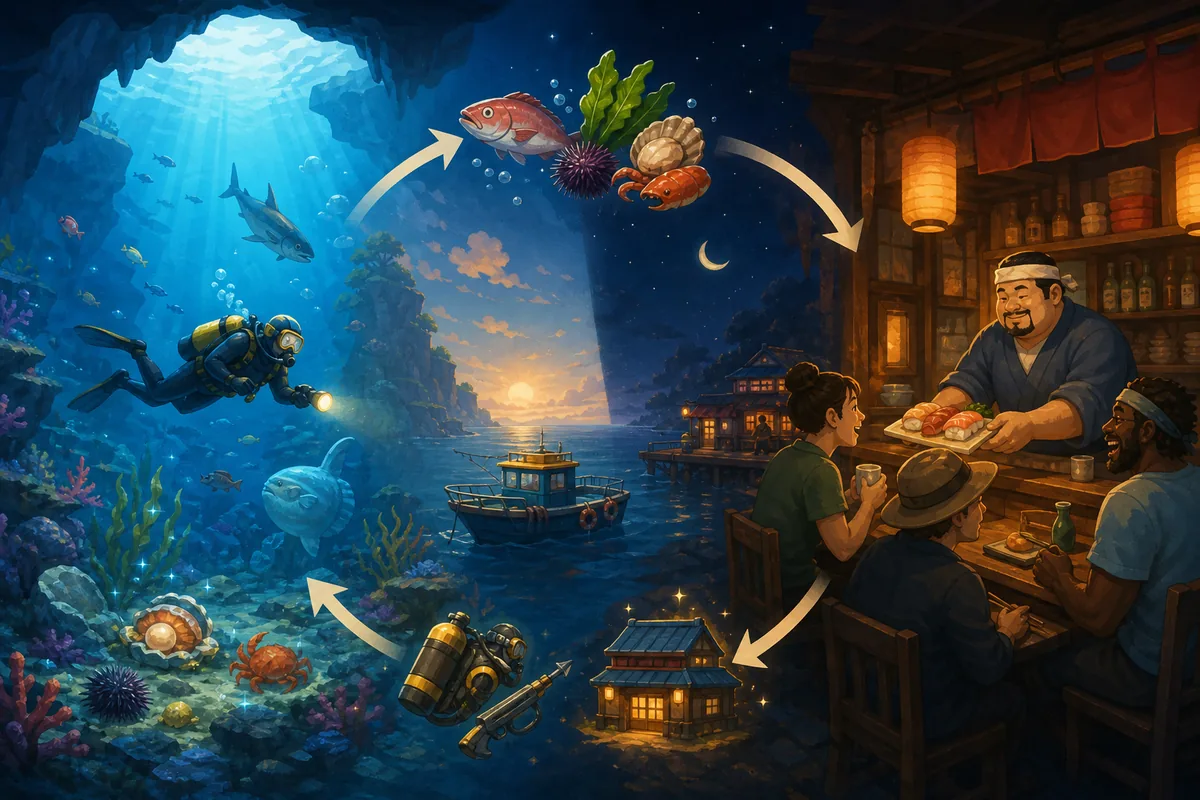
Dave the Diver is good because it rarely asks you to do the same kind of work for very long. A dive gives you fish, materials, money, and small discoveries; the evening turns those supplies into a restaurant problem; the next day gives you a new reason to return underwater. That rhythm makes the game approachable for players who like exploration but do not want a demanding survival system.
The strongest part is the contrast between the two halves. Underwater, you manage oxygen, cargo space, weapons, depth, and risk. At night, you manage dishes, serving speed, wasabi, drinks, staff, and menu choices. Neither half needs to become a full simulation, so the game stays readable while still giving upgrades and discoveries a practical purpose.
The main limitation is that the novelty is front-loaded. Story events, minigames, and new systems can interrupt the routine in a charming way, but a completionist run eventually asks you to repeat resource routes and restaurant tasks. This is a very good fit for a flexible first playthrough, less so if you want a tightly optimized endgame forever.
The verdict
What makes Dave the Diver worth playing
The game succeeds when its two halves keep solving problems for each other instead of feeling like separate minigames.Why it works
- A clear day-to-night loop gives every dive a useful short-term purpose.
- The Blue Hole keeps exploration readable with changing depths, fish behavior, and routes.
- Bancho Sushi turns ordinary catches into a visible restaurant progression path.
- Story scenes and side activities add variety without requiring a complicated build guide.
- The tone is warm, funny, and generally comfortable for short or long solo sessions.
Where it slows down
- Some resource routes become familiar once you know which fish and materials your menu needs.
- The restaurant half can feel repetitive if you optimize every night instead of following the story.
- A few minigames are charming interruptions rather than systems you will want to master forever.
- Players looking for constant combat or a deep management simulator may find both halves too light.
- Completionists should expect more repeated dives than a story-only run.
The core experience
The loop is the reason the game feels different
Many games have exploration and management, but Dave the Diver makes each side feed the other immediately. A fish is not just a collectible: it can become a new dish, a menu experiment, a reason to improve equipment, or a problem for your ingredient supply. That gives small discoveries a practical payoff without turning every decision into a spreadsheet.
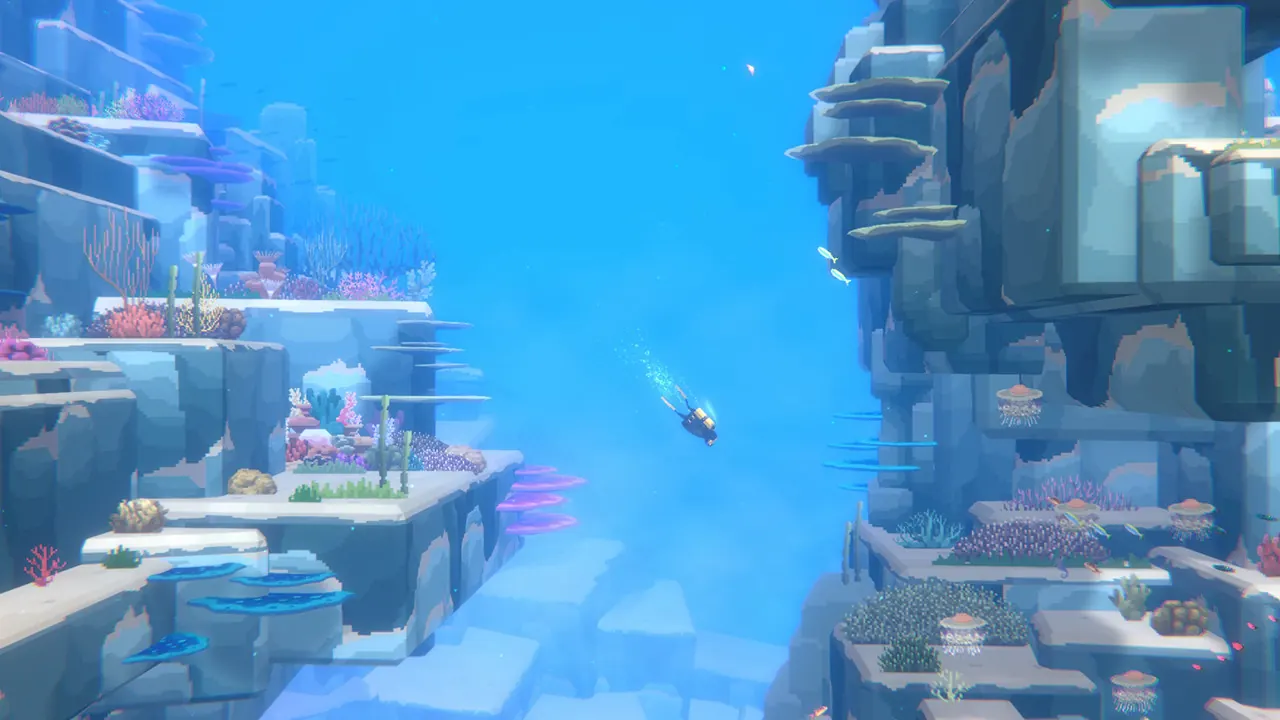
The underwater side is at its best when you are making a quick risk calculation. Do you use oxygen to search one more room, carry a lower-value fish because it is needed for a recipe, or retreat before a hostile creature breaks the run? The controls stay approachable, but the pressure creates enough texture to make familiar routes feel purposeful.
The official Steam screenshots capture the useful contrast: Dave's daytime work is colorful and active, while the evening restaurant gives the same resources a social and economic context. That contrast is more important than any individual weapon, staff member, or recipe because it keeps progression connected.
Exploration has a reason
Fish, materials, blueprints, and story discoveries all connect the dive to the next restaurant decision.
Progression stays legible
Upgrades usually answer a visible problem: carry more, survive deeper water, serve faster, or protect a profitable menu.
The tone lowers the pressure
The game can create urgency without making every mistake feel like a permanent failure.

Beyond the first hours
The systems are light, but they are well connected
This is not a hardcore simulator. Its appeal comes from how quickly the game explains why a new tool, staff member, or recipe matters.Staff and service
The restaurant becomes more interesting when serving, cooking, drinks, and cleaning begin to compete for attention. You can solve those bottlenecks with staff choices instead of perfect execution.
Weapons and tools
Weapons are useful because they change how you approach fish and threats, not because the game asks you to chase a single perfect build from the start.
Recipes and supply
A strong dish is only strong if its ingredients are repeatable. That small constraint gives diving routes and dispatch decisions a reason to exist.
Side content
Minigames, characters, and story events keep the campaign from becoming a pure resource loop, although not every interruption will appeal to every player.
Who should play
Is Dave the Diver a good game for you?
Use the fit column to decide whether its relaxed variety matches the way you want to spend your next few evenings.| Player type | Fit | Why |
|---|---|---|
| You like exploration with clear rewards | Strong fit | Every dive can improve a dish, unlock a tool, or open a new route. |
| You want a low-stress solo game | Strong fit | The tone is gentle and the game rarely demands perfect performance. |
| You want one deep competitive system | Mixed fit | The game offers several connected systems, but none is built as a specialist simulator. |
| You dislike repeated farming | Weak fit | Longer completionist goals require returning to familiar waters and menus. |
Time and value
How much time does the game deserve?
The best way to play is to treat the main story as the first finish line, then decide whether the restaurant, collection goals, and optional content are still giving you useful variety. A relaxed first playthrough can feel satisfying without requiring every weapon, staff upgrade, or dish to be perfected.
If you are comparing the game with a short adventure, use the story and relaxed-play estimates in our dedicated playtime guide. Completionists and DLC players should expect additional dives because the game turns collection into part of its long-term rhythm.
See the playtime guideFinal verdict
Dave the Diver is worth playing if variety matters more than mastery
The answer to “is Dave the Diver good?” is yes for players who want an approachable adventure that keeps changing its task. The game is at its best when you enjoy the small connection between a morning dive and an evening service rush, then use the money and materials to make tomorrow feel slightly different.
It is less convincing as an endless optimization game. Once the surprise fades, repeated routes and restaurant routines become the cost of completion. That is a reasonable trade for a game whose main strength is its mix of exploration, humor, progression, and management rather than a single flawless system.
Continue with a focused guide
Use the review with the practical guides
The review answers whether the game fits you; these guides help once you decide to keep playing.FAQ